Most apartments hand you one blank wall and call it a limitation. It can be the opposite. With a little intention, that wall becomes the anchor of a nightly wind-down that asks nothing of your square footage and gives back far more than another scroll ever could. The evening stops being something you plan and starts being something you slip into, the way you used to slip into bed with a book.
Start the evening by dimming, not deciding
The hardest part of relaxing at home is the decision fatigue that comes before it. You tell yourself you will watch something, then spend forty minutes choosing. A fixed nightly ritual removes the choice. The lights go down, the wall comes alive, and the only question left is which old favorite you are revisiting. In a studio or a one-bedroom, that simplicity matters more than anywhere else, because there is no separate room to retreat to.
When the setup is this light, the ritual survives a long day. You are not assembling a theater. You are lowering the lights and letting a familiar story fill the wall. That low bar is exactly why it sticks, and why the wall earns its place in the room instead of fighting the room for space.
Pick a spot that already works
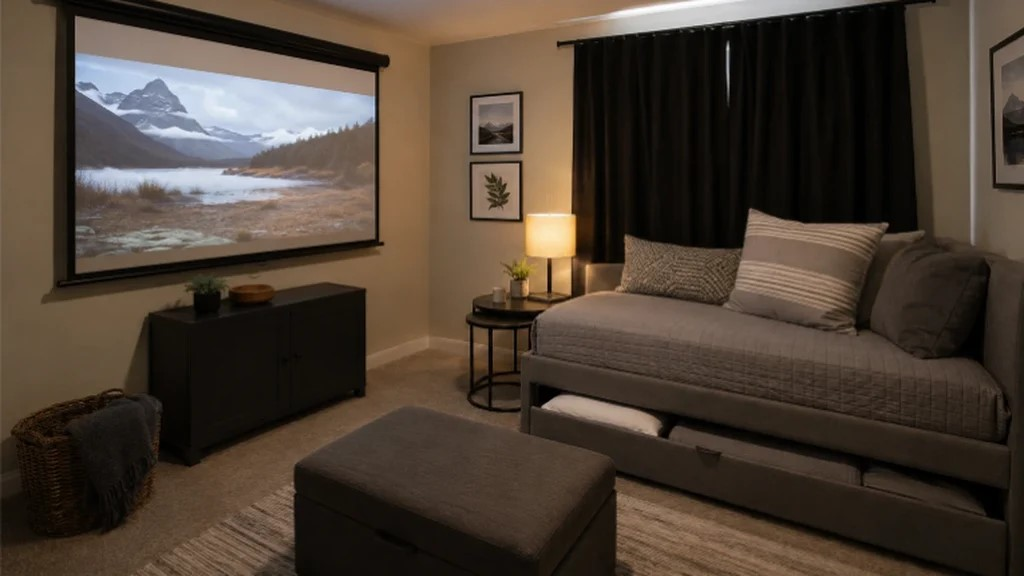
You do not need a dedicated media room to make this feel real. The wall behind the sofa, the empty stretch above a bookshelf, even the side of a wardrobe can hold the picture. What matters is that it is yours and it is consistent, so the habit forms around a place rather than a device. An AWOL LuxVision sits close to the surface and throws a large, steady image without demanding floor space you do not have. That near-wall placement is what makes a tiny home viable for big-screen evenings.
Consistency beats perfection here. The same corner, the same low chair, the same soft light. Over a few weeks the body learns the cue, and the evening begins the moment you sit down rather than the moment you finish setting up.
Let the picture do the calming
There is a difference between a bright, noisy feed and a warm, contained scene. The point of the ritual is the second one. Soft lighting, a familiar film, and a picture large enough to pull your attention away from the day. When the image is steady and the colors sit right, your brain stops scanning for the next thing. That is the real product of the evening: not entertainment, but permission to stop. A good laser projector keeps the brightness even across the wall, so the corners do not fall into a dim haze.
The calm is not a feature you buy. It is what shows up when the technology stays quiet. The best nights are the ones where you forget the device exists and only remember the story playing in front of you.
Keep the setup invisible by day
Small homes punish clutter fast. The trick is a setup that disappears when the sun is up. Cables tucked, the device parked on a low surface, the wall returned to being just a wall. Because the projector lives inches from the surface, there is no ceiling mount and no permanent trace. By morning the room reads as a normal living space again, which is exactly why the nightly version feels like a treat.
Visitors never see the theater. They see a tidy room. You see the room that becomes a cinema the moment the lights drop, and the contrast is what makes both versions of the space work.
Build the habit around the wind-down
The screen is a tool, not the point. The point is the thirty minutes where the day is allowed to end. Pair the picture with something small and repeatable: a cup of tea, a worn throw blanket, the same playlist of opening credits. These tiny constants tell your nervous system that the work is over. The wall is just the easiest way to gather them into one place.
When the habit is about the wind-down and not the watchlist, you stop chasing the perfect film. Any familiar story will do, because the ritual, not the content, is what relaxes you.
Let the wall do what the phone cannot
The phone offers infinite choice and delivers none of it. The wall offers one thing and delivers presence. That is the quiet trade at the heart of the ritual. When the picture is up, the room has a center, the evening has a shape, and the day finally has an end. You are not escaping the small space. You are using it better than the floor plan ever intended, and the blank surface becomes the most generous part of the home.
What makes this stick is that it asks so little. No app to open, no feed to survive, no algorithm deciding your mood. The wall waits, the lights drop, and the evening begins on your terms. Small space, large evening, and not a single square foot lost in the process. The habit costs nothing but attention, and it pays back every night you actually sit down.
Make it a tradition, not a treat
One good movie night is a memory. The same night every week is a rhythm. Rhythms are what small spaces are good at, because they need no extra room, only repetition. Pick a night, keep it, and let the wall earn its place in your routine. The apartment does not have to grow for the evening to feel bigger, and the blank surface stops being dead space.
When the ritual is set, that wall becomes the most used surface in the home, and the one you miss most when you are away. Small space, large evening, no compromise.
About the Author