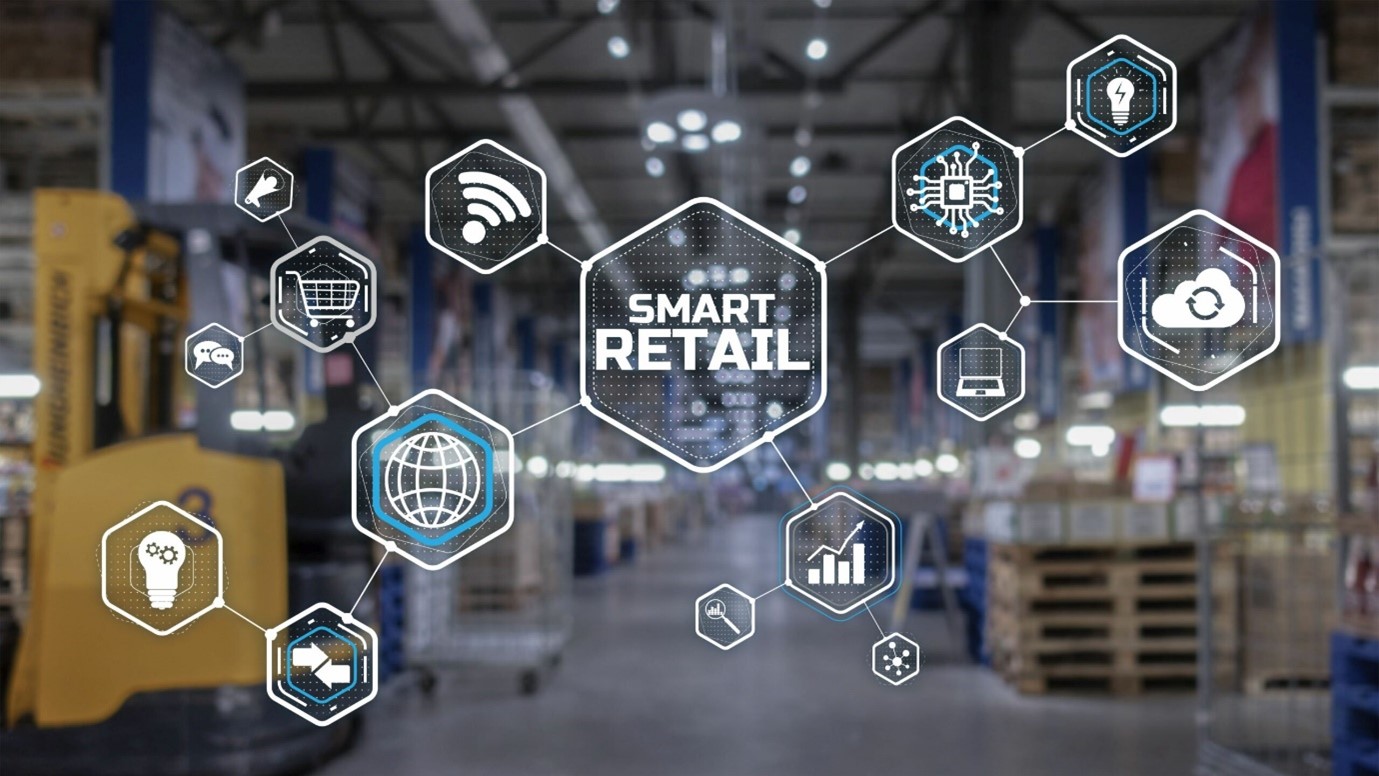
Smart retail is often portrayed through visible innovations: digital signage, interactive kiosks, and cashier‑less checkout. Beneath these experiences lies a quieter evolution of edge infrastructure, where small, networked compute nodes handle everything from people counting and queue analysis to inventory monitoring and localized recommendation engines. The design of this infrastructure has a direct impact on deployment cost, reliability, and the agility with which retailers can experiment.
Unlike industrial or transportation settings, retail environments vary widely in physical layout and connectivity quality. Some stores can support centralized “mini‑data‑centers” in back rooms; others require distributed compute capability embedded directly in shelves, kiosks, or point‑of‑sale terminals. In both cases, running AI workloads close to the customer reduces latency and dependence on external networks, which is crucial for responsive interaction and resilience during connectivity outages.
Power and acoustics are subtle but important constraints. Retail spaces rarely tolerate noisy, actively cooled equipment near customers, and many devices draw power from existing outlets or low‑power DC supplies. This favors SoCs that deliver enough performance for video analytics, recommendation models, or voice interfaces within a single‑digit‑watt envelope. AI System‑on‑modules built on platforms like the i.MX 8M Plus illustrate this category: they blend general‑purpose CPU, NPU, multimedia, and connectivity into compact, fanless designs that can be embedded into displays, kiosks, or small gateway boxes.
A key industry trend is the move from ad‑hoc deployments to more orchestrated edge computing platforms. Rather than installing isolated devices from different vendors for each use case, retailers are seeking ways to treat their stores as cohesive computing environments. This involves standardizing on a small set of hardware platforms, unifying software stacks, and deploying management layers that can monitor, update, and reconfigure devices remotely. Such consolidation makes it easier to roll out new services, A/B‑test experiences, and enforce consistent security policies across locations.
In this context, the specific choice of SoM or embedded system is less about brand and more about its ability to fit into a broader operational model. Devices that expose sufficient interfaces for sensors and displays, offer long‑term software support, and integrate cleanly with fleet‑management tools give retailers more freedom to innovate at the application level. As experimentation becomes a permanent state rather than a one‑time project, the underlying edge infrastructure must be designed to handle continuous change without constant hardware churn.