Key Takeaways
- Living alone does not mean living without support or giving up independence.
- An emergency plan should address health events, falls, fires, severe weather, power loss, and communication problems.
- Clear paths, good lighting, current medical details, and trusted contacts can help reduce avoidable risks.
- Check-in routines work best when they are simple, respectful, and agreed upon in advance.
- Technology can make it easier to request help, but it should be one part of a broader plan.
- Plans should be reviewed after a move, health change, medication change, or shift in daily routines.
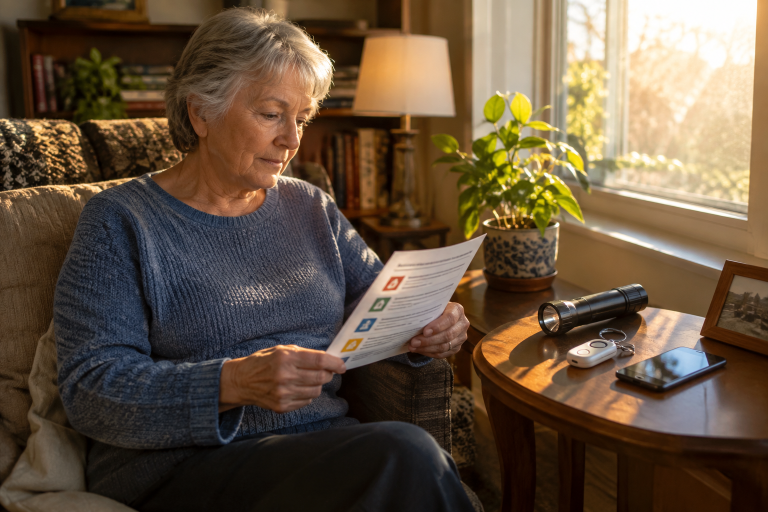
Living alone can support privacy, familiar routines, and independence. A thoughtful emergency plan helps protect those benefits by making it easier to respond to unexpected events. Simple preparations, including a dependable way to call for help such as a personal alarm, can reduce uncertainty after a fall, sudden illness, fire, or severe weather event. The purpose of planning is not to assume the worst or take away control. It is to make sure important information, supplies, and trusted people are ready before they are needed. The best plan is personal, easy to understand, and realistic for the home, health needs, and local community.
Why Emergency Planning Matters
A calm plan gives a person a short list of actions to follow during a confusing or stressful moment. This matters when a fall, illness, or home emergency makes it difficult to reach a phone, unlock the door, remember a medication list, or explain where help is needed. Falls are a serious concern for adults aged 65 and older. In 2024, falls among older adults led to about 4.5 million emergency department visits in the United States, according to CDC data.
Preparation can preserve independence by identifying practical solutions before a crisis occurs. A person can decide who to contact, how visitors or responders can enter the home, and what assistance feels appropriate. Those choices are far easier to make in advance than in the middle of an emergency.
How to Spot Common Risks at Home
Start with a room-by-room walk-through during daylight and again after dark. Look at the home through the eyes of someone who may be tired, unsteady, carrying laundry, or moving quickly to answer the door.
- Remove or secure loose rugs, clutter, cords, and other obstacles in walking paths.
- Improve lighting near stairs, hallways, bedrooms, bathrooms, and entrances.
- Watch for wet floors, slippery bath surfaces, and missing grab bars where extra support is needed.
- Move frequently used items so they can be reached without climbing, bending deeply, or stretching.
- Make sure house numbers, apartment numbers, gates, and building access instructions are easy to identify.
- Consider whether pets, mobility aids, or furniture could obstruct an exit or narrow a path.
How to Create a Simple Response Plan
An emergency plan should be short enough to use when someone is hurt, frightened, or confused. Keep the main page in large, readable print and store copies near the phone, in a wallet or bag, and with a trusted contact.
- Write the full home address, apartment or unit number, and local emergency number.
- List major health conditions, allergies, medications, mobility needs, and preferred hospital if applicable.
- Name one primary contact and at least two backup contacts.
- Explain how someone can enter the home if the resident cannot reach the door.
- Add notes about pets, elevators, gate codes, building staff, or communication needs.
- Include the location of the medication list, emergency kit, flashlight, and backup charger.
How to Build a Reliable Contact List
One person should not have to carry the whole responsibility. A dependable network can include a nearby neighbor who can check the home, a friend or family member who makes regular calls, a building manager or caregiver, a pharmacy or healthcare contact, and an out-of-town person who can coordinate if local contacts are unavailable. Agree on each person’s role. For example, one person might call every morning, another may hold a spare key if appropriate, and another may arrange transportation during an evacuation. Clear expectations help prevent confusion or duplicated efforts.
Ways to Reduce Fall Risk
Emergency planning should include both prevention and response. Keep a phone or help device within reach in commonly used rooms, wear footwear with secure soles, and use handrails or grab bars where they add stability. Night lights can make trips to the bathroom easier to navigate. A healthcare professional can also review concerns involving balance, vision, medications, or recent falls. Store everyday items between waist and shoulder height when possible, and avoid relying on unstable furniture for support.
Preparing for Power Outages and Severe Weather
Plans should reflect local hazards, whether that means hurricanes, winter storms, flooding, wildfires, or extreme heat. Keep water, shelf-stable food, flashlights, batteries, chargers, essential medicines, and necessary medical supplies together so they are easily accessible. Anyone who relies on electricity or batteries for medical or mobility equipment should plan for outages in advance. Identify a safe place to go if the home becomes too hot, cold, or inaccessible, and arrange transportation before conditions become urgent. The emergency preparedness guidance for older adults and people with disabilities emphasizes planning around individual health, mobility, communication, and support needs.
Choosing Tools That Make It Easier to Get Help
Different tools suit different people. Options may include phones kept in more than one room, voice-activated calling, scheduled check-in calls, emergency contact cards near the entrance, and wearable devices that can request help when a phone is out of reach. Before relying on any tool, test it in the places where it will be used. Confirm battery life, charging habits, signal strength, volume, and ease of use. A device is most useful when it is nearby, working properly, and comfortable enough to use every day.
Why Practice and Regular Reviews Matter
A brief practice session can reveal gaps before a real emergency. Call the primary contact, walk the safest exit route, check that written information is easy to read, and test lights, chargers, and communication tools. Ask trusted contacts to confirm they understand the plan and know how to reach one another. Review the plan every few months, and update it after changes in health, medication, mobility, housing, phone numbers, or support relationships.
Final Thoughts
A safer emergency plan does not need to be complicated. Clear paths, current information, reliable contacts, useful supplies, and a practical way to request help can make daily life feel more manageable. The plan should reflect the person’s health needs, living situation, daily routines, and available support rather than rely on a one-size-fits-all approach. It can also include simple steps for common situations, such as a fall, sudden illness, power outage, or severe weather. Reviewing the arrangements regularly helps ensure that contact details, medications, supplies, and communication methods remain up to date. The goal is to prepare for likely problems while maintaining choice, dignity, and independence, so older adults can feel more confident about staying in their homes and making decisions that suit their needs.
About the Author